
Selecting the perfect boiler for your home is about more than staying warm—it’s about optimizing comfort, cutting energy costs, and investing wisely for the long run. Heating often accounts for a significant portion of your energy bill, so having the right system is essential for saving money and maintaining year-round comfort. If you’re looking to upgrade an outdated boiler or need a new installation, understanding today’s top options will set you up for success.
There are three primary boiler types you’ll encounter:
- Cast iron boilers, prized for toughness and reliability
- High-efficiency boilers, known for modern tech and energy savings
- Combination boilers, which bring the convenience of home heating and hot water in a compact footprint
Each option offers distinct features, benefits, and trade-offs that may impact your home’s energy use and comfort.
This guide walks you through what makes each boiler unique, their advantages, drawbacks, and which homes benefit most, making your buying decision both informed and confident.
What Is a Cast Iron Boiler?
Cast iron boilers are the traditional backbone of home heating, known for their robust, heavy-duty construction and time-tested reliability. Available in both steam and hydronic models, they’re a go-to choice for replacing existing systems, often helping to cut down on labor during installation. These boilers heat water in a large cast-iron heat exchanger, then distribute that warmth through radiators or baseboards. While they may lack some of the modern features and higher efficiency of newer models, their substantial build means they can keep delivering comfortable, even heat for years.
Benefits of Cast Iron Boilers
Cast iron boilers truly shine in longevity. With expected service lifespans of 20–30 years, they stand up well against the test of time and can withstand harsh winter conditions year after year. Their simple mechanical controls make for easy, straightforward operation and lower maintenance complexity. Almost any service pro can work on these boilers, and parts are often readily available.
The thermal mass built into cast iron means the system holds heat exceptionally well, making temperature swings less noticeable and ensuring a steady, consistent level of comfort. This makes them an excellent fit for larger homes with big heating demands or properties that need to withstand freezing temperatures.
From a cost perspective, cast iron boilers tend to be less expensive upfront than high-efficiency models. They don’t pack as much modern technology inside, and that simplicity means your initial investment is relatively affordable—ideal for those looking for long-term reliability over technical bells and whistles.
Drawbacks of Cast Iron Boilers
The trade-off is in simultaneous use: combi boilers can struggle to provide hot water to multiple taps at once. For larger households, or homes with multiple bathrooms that see heavy simultaneous use, a combi boiler might leave you wanting. Sizing is crucial—a unit that’s too small won’t sufficiently heat the home or provide enough hot water. Depending on the fixture count and total GPM flow, adding an indirect tank may be necessary to meet demand. Repairs can also be more involved, since both heating and domestic water are combined in one machine.
Best Homes for Cast Iron Boilers
The square footage of your home directly determines the size of the boiler you need. A small house, for example, will require a boiler with a lower BTU output than a larger one, like a 2,000-square-foot home. For these larger homes, cast iron boilers are a reliable choice, especially if you have radiators or baseboards and prefer a system that you can "set and forget." These boilers are ideal for homes in cold climates and for those who value proven performance over modern efficiency.
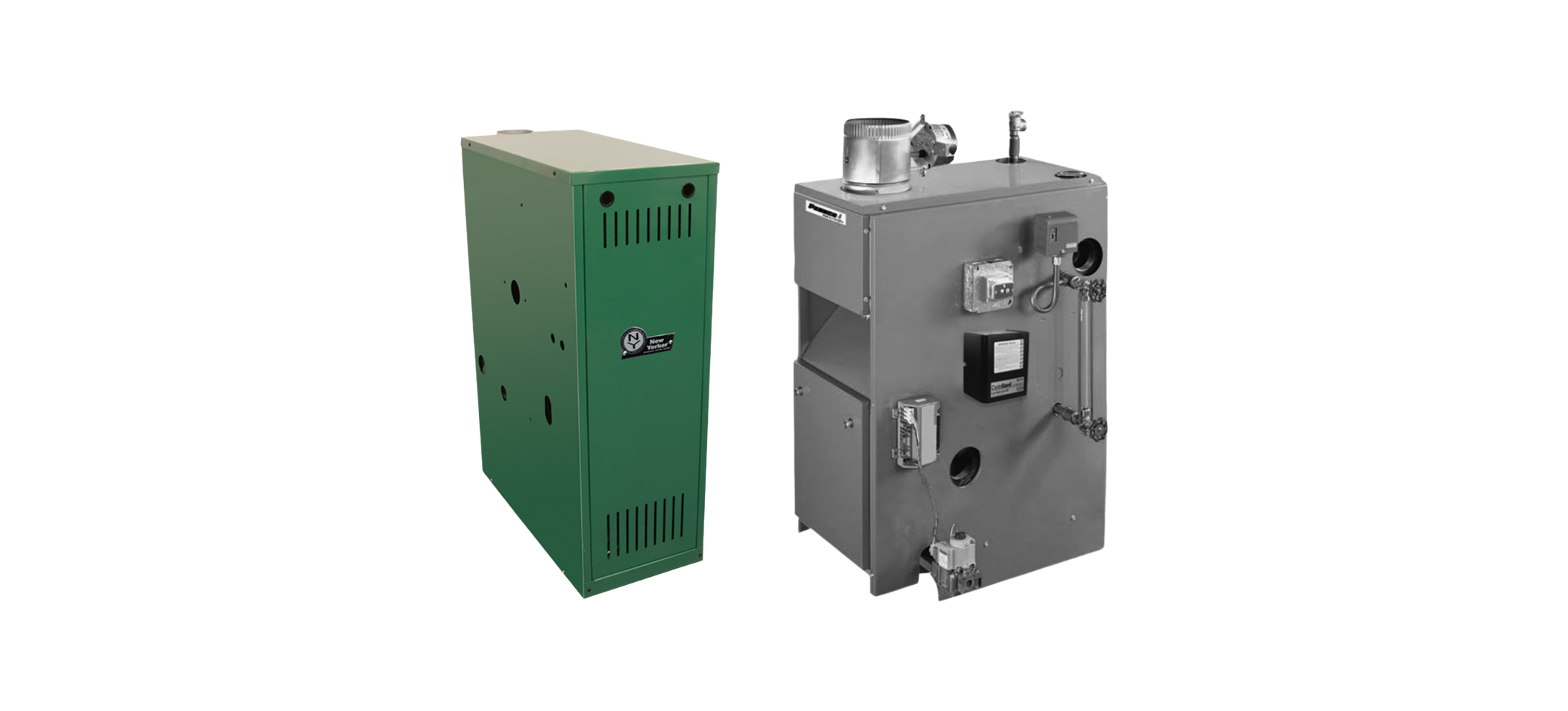
Looking for time-tested reliability? The New Yorker CG50-FNGH delivers classic cast-iron toughness with decades of proven performance.
For larger homes that need serious heating power, the Pennco Silver 1606HSID is a rugged, high-output option built to last.
What Is a High-Efficiency Boiler?
High-efficiency boilers represent today’s smartest, most resource-saving options for home heating. These units incorporate advanced technology—like condensing heat exchangers and modulating burners—to extract every bit of warmth from your fuel. By capturing heat that would be lost in a standard chimney exhaust, these boilers routinely hit efficiency ratings between 90–98%.
Benefits of High-Efficiency Boilers
The appeal is clear: high-efficiency boilers translate to serious savings on your energy bill, with up to 30% reductions compared to older units. Your home benefits from lower emissions, making these ideal for eco-conscious households or those working to meet local environmental standards. They’re not just good for nature—they’re also good for your wallet, as many qualify for state/federal rebates and utility incentives.
These boilers are compact and lightweight, often wall-mountable, opening up valuable space in mechanical rooms or basements. Many models come equipped with intuitive digital controls and connections for remote monitoring, enabling you to fine-tune comfort and efficiency from your smartphone.
Drawbacks of High-Efficiency Boilers
There’s an upfront premium: many high-efficiency boilers cost 20–40% more at purchase compared to traditional models, though some HE units are now priced much closer. The bigger factor can be labor—converting a traditional hydronic system to a high-efficiency setup often adds significant installation costs. Maintenance and repair may also require more specialized knowledge, and proper installation is critical to achieving peak efficiency, so hiring an experienced pro is a must.
Best Homes for High-Efficiency Boilers
These systems shine in well-insulated homes, new construction, or any property where lower utility bills and greener heating are top priorities. If you want to future-proof your heating system, reduce emissions, and enjoy the convenience of smart controls, high-efficiency boilers are the way to go.
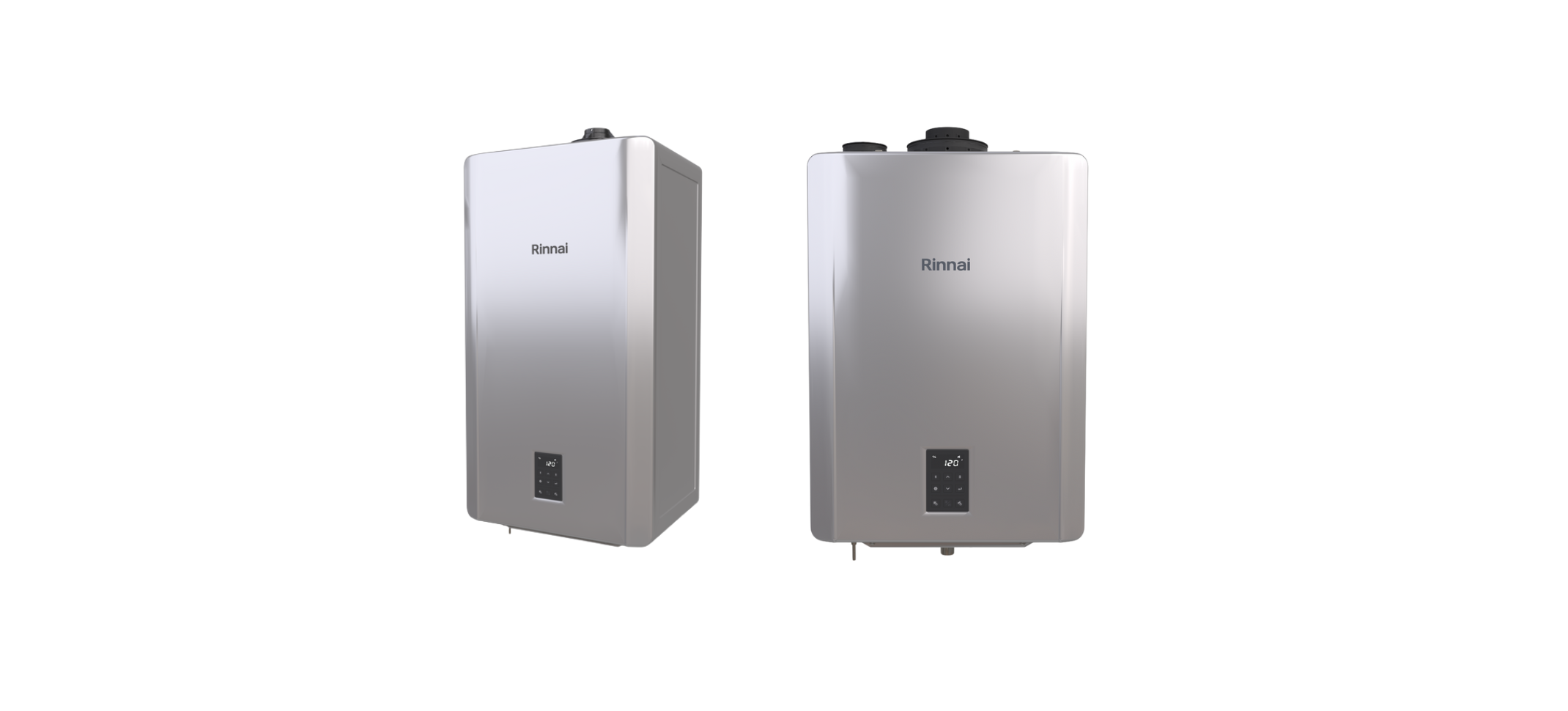
Cut your energy bills with the Rinnai I Series Plus Solo 150 kBTU — a compact, wall-mountable boiler designed for maximum fuel savings.
Want heating and hot water in one? The Rinnai I Series Plus Combo IP199 delivers both, with condensing efficiency that keeps costs low year after year.
What Is a Combi Boiler?
Combi boilers bundle home heating and domestic hot water into one smart, space-efficient package. Instead of maintaining a large hot-water tank, these units deliver hot water on demand: open a faucet and the boiler dedicates its power to heating water instantly, then switches back as soon as you’re done.
Benefits of Combi Boilers
Top marks for efficiency—combi boilers only heat water when needed, reducing wasted energy. They’re unmatched when it comes to saving floor space, making them perfect for condos, apartments, or houses short on storage. Their design simplifies installation and eliminates the need for separate water heaters or expansion tanks. With the right sizing, you enjoy a steady flow of hot water for showers, sinks, and appliances—with no waiting around for a tank to refill.
Upfront installation costs are often lower since you’re purchasing just one unit, and maintenance can be simpler since everything’s contained in a single system. In smaller homes or families with moderate hot water needs, combi boilers deliver impressive comfort and convenience.
Drawbacks of Combi Boilers
The trade-off is in simultaneous use: combi boilers can struggle to provide hot water to multiple taps at once. For larger households, or homes with multiple bathrooms that see heavy simultaneous use, a combi boiler might leave you wanting. Sizing is crucial—a unit that’s too small won’t sufficiently heat the home or provide enough hot water. Repairs can also be more involved, since both heating and domestic water are combined in one machine.
Best Homes for Combi Boilers
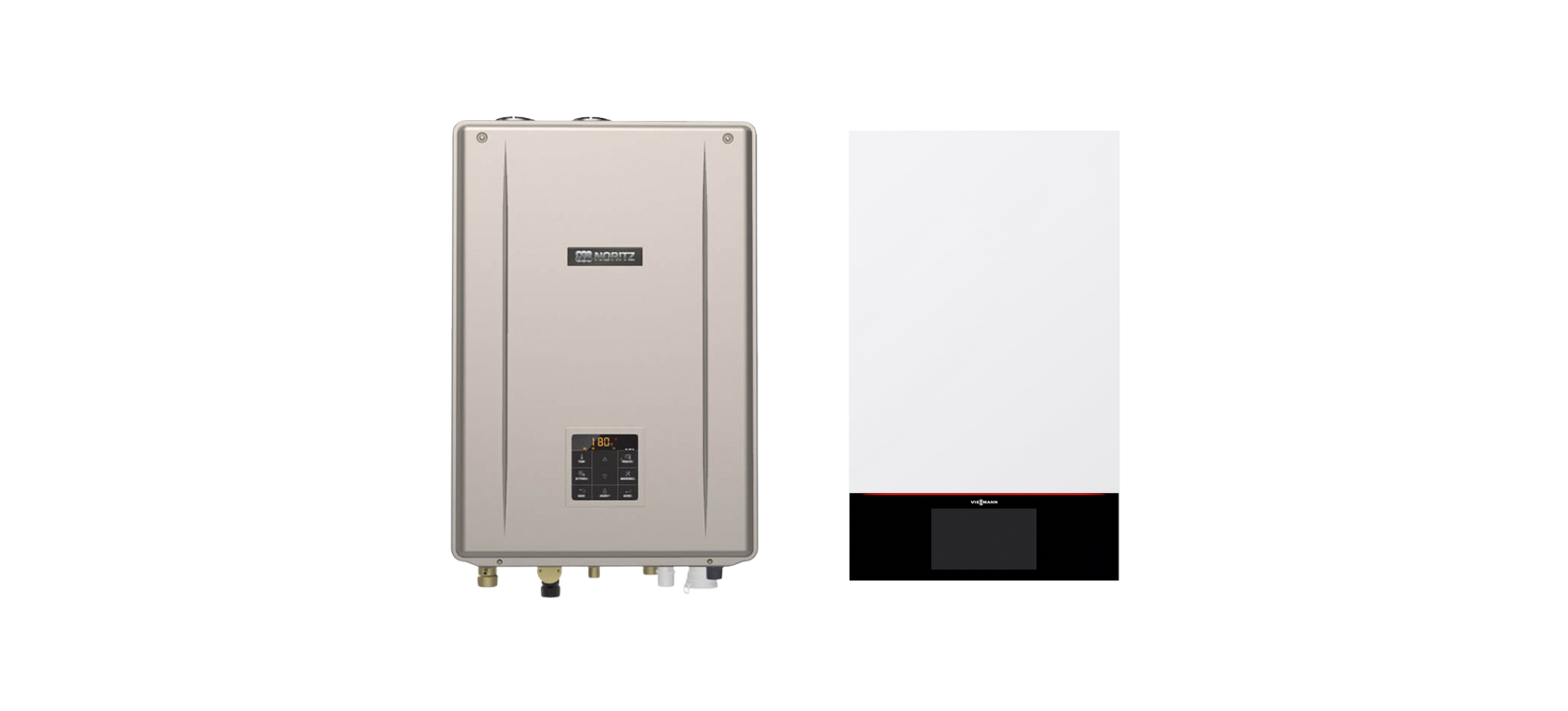
Ideal for homes under 2,000 sq. ft. or families with modest hot water demands, combi boilers are a popular pick for urban dwellings, condos, and townhomes. If you value efficiency, space savings, and don’t require multiple showers running at the same time, combi boilers like the Viessmann Vitodens 100‑W B1KE‑120 and Noritz NRCB199DV stand out as strong choices.
Save space without sacrificing comfort: the Viessmann Vitodens 100-W B1KE-120 gives you efficient home heating plus hot water on demand.
Need nonstop hot water for a busy household? The Noritz NRCB199DV is a powerhouse combi boiler that keeps showers, sinks, and appliances running smoothly.
Cast Iron vs. High-Efficiency vs. Combi Boilers: Side-by-Side Comparison
| Feature | Cast Iron Boilers | High-Efficiency Boilers | Combi Boilers |
|---|---|---|---|
| Efficiency Rating | 80-85% | 90-98% | 85-95% |
| Expected Lifespan | 20-30 years | 15-20 years | 15-20 years |
| Upfront Cost | $3,000-$6,000 | $4,000-$8,000 | $3,500-$7,000 |
| Annual Operating Cost | Highest | Lowest | Moderate |
| Ease of Maintenance | Simple | Complex | Moderate |
| Ideal Home Size | Large (2,000+ sq ft) | Any size | Small to medium (<2,000 sq ft) |
| Space Requirements | Large footprint | Compact | Very compact |
| Hot Water Capacity | Separate system needed | Separate system needed | Unlimited on-demand |
| Installation Complexity | Moderate | High | Moderate |
| Rebates Available | Limited | Yes, substantial | Some available |
| Recommended Models | New Yorker CG50-FNGH; Pennco Silver 1606HSID | Rinnai I Series Plus Solo 150 kBTU; Rinnai I Series Plus Combo IP199 | Viessmann Vitodens 100-W B1KE-120; Noritz NRCB199DV |
This side-by-side chart lays out the most important decision points clearly. Cast iron excels in toughness and lifespan. High-efficiency models top the charts in energy savings and modern features. Combi boilers maximize space and give you instant hot water—ideal for smaller homes but may require sizing care. Weigh your priorities, then check recommended models to match your needs.
Key Factors to Consider When Choosing a Boiler
When selecting a boiler, weigh what matters most for your home and family. Start by assessing your home’s size and insulation quality—larger or draftier homes benefit from cast iron’s sturdy output, while smaller or well-insulated homes can benefit from high-efficiency or combi models. Consider the pattern of your hot water use: do multiple showers and appliances often run together? A separate hot water system or a higher-output boiler may be essential.
- Budget is critical. Upfront, high-efficiency boilers can require a larger investment, but the long-term savings in fuel costs and available rebates often even out. Cast iron systems tend to offer reliability at a lower price but come with higher ongoing utility bills. Keep an eye out for local or state incentives for energy-efficient upgrades—they can make a big impact on the real cost.
- Don’t overlook physical space. Measure carefully—cast iron systems take up more room, while combi and many high-efficiency options are compact and may even be wall-mounted. Also, take a look at your home’s fuel source; natural gas, propane, or oil availability and pricing vary by region, and some rebates may be fuel-specific.
- Finally, consider ease of maintenance and available expertise. High-efficiency and combi boilers require more specialized setup and maintenance, so confirm experienced service is available in your area to keep your system running efficiently for years.
Which Boiler Is Right for You?
Still unsure? Here’s a quick recap to help guide your decision:
- Choose cast iron if you have a large home, want long-term durability, and prefer simple, reliable operation—even at the cost of higher fuel bills. These models are especially well-suited for harsh climates and owners planning to stay put for decades. For durability that lasts generations, explore cast-iron classics like the New Yorker CG50-FNGH or Pennco Silver 1606HSID.
- Opt for a high-efficiency boiler if your top priorities are slashing energy costs, lowering your environmental footprint, and leveraging the latest in heating tech. These units are ideal for any home where insulation is good, and energy savings matter most. If efficiency is your top priority, the Rinnai I Series Plus Solo 150 kBTU and Rinnai I Series Plus Combo IP199 are built for long-term savings.
- Go with a combi boiler if you want to maximize space, value the convenience of on-demand hot water, and have a smaller household with moderate water needs. For homes short on space, a combi system like the Viessmann Vitodens 100-W B1KE-120 or Noritz NRCB199DV bring unbeatable convenience.
If you're still deciding, our experts are happy to walk you through sizing, selecting, and purchasing the best fit—just reach out for tailored advice.
Final Thoughts
Choosing the right boiler can transform your comfort, energy costs, and peace of mind. Weigh your space, hot water needs, budget, and the kind of performance you expect from your heating system. Ready to upgrade your home comfort? Browse our top boiler models to see what’s in stock, or talk to our team for help choosing the system that’s right for your space and budget.
Frequently Asked Questions About Boilers
What is the average lifespan of a boiler?
Cast iron boilers can last 20–30 years with proper maintenance, while high-efficiency and combi boilers typically last 15–20 years. Regular servicing—and maintaining good water quality—both play a huge role in extending the lifespan of any boiler. Poor water quality can lead to scaling, corrosion, or sediment buildup inside the system, all of which reduce efficiency and shorten the unit’s life.
Can I switch from a cast iron boiler to a high-efficiency or combi boiler?
Yes, many homeowners upgrade to high-efficiency or combi systems. However, switching may require adjustments to venting, piping, or electrical connections. A professional installer can confirm what’s needed for your home.
Can I get a high-efficiency steam boiler?
No. Steam boilers are not available in true high-efficiency models. Steam systems rely on older technology that doesn’t lend itself to the condensing process used in today’s high-efficiency boilers. If you currently have a steam system, your options are limited to standard-efficiency cast iron steam boilers. Upgrading to a high-efficiency boiler would typically require converting the system from steam to hot water, which is a significant project.
Which boiler type is most cost-effective?
If you prioritize lower upfront cost and durability, cast iron may be the best value. If you want to save on monthly energy bills, a high-efficiency model usually pays for itself over time. Combi boilers are most cost-effective for smaller homes where you’d otherwise need both a boiler and a separate water heater.
How do I know what size boiler I need?
Boiler sizing depends on your home’s square footage, insulation, and hot water demand. Oversized boilers waste energy, while undersized boilers struggle to keep up. Our team can help you run a heat load calculation to ensure you get the perfect fit.


