
Imagine this: You wake up on a crisp, frosty morning, pour yourself a glass of water from the kitchen tap, and take a big gulp. But instead of refreshing, clean water, you taste something metallic, muddy, or just plain wrong. Gross, right? That’s the nightmare scenario backflow prevention is designed to stop.
While plumbing often feels like "out of sight, out of mind," certain components demand your attention, especially when the temperature drops. We’re talking about backflow preventers and pressure vacuum breakers (PVBs). They are the unsung heroes protecting your drinking water from contamination. But what exactly are they, and why does winter pose such a big threat to them?
Let’s dive into the nuts and bolts of keeping your water safe when the frost hits.
What Is Backflow?
Before we talk about preventing it, we need to understand the enemy. Backflow is exactly what it sounds like—water flowing in the wrong direction.
Your plumbing system relies on pressure to push clean water to your faucets. But sometimes, that pressure drops significantly due to a burst main or heavy firefighter use down the street. When that happens, the pressure in your home’s pipes might become lower than the pressure outside them (like in your irrigation system or garden hose). This creates a vacuum effect, siphoning dirty water backward into your clean supply.
Think of it like drinking through a straw. If you stop sucking and let the liquid drop back down, that’s gravity. But if someone blew into the other end, the liquid shoots back at you. That’s backflow. And you definitely don’t want lawn fertilizer, pet waste, or pool chemicals shooting back into your kitchen sink.
Enter the Pressure Vacuum Breaker (PVB)
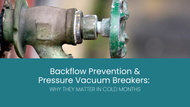
This is where the hardware comes in. A Pressure Vacuum Breaker (PVB) is a specific type of backflow prevention device. You’ll most commonly see these installed on irrigation systems, usually appearing as a brass assembly sticking up out of the ground near your house.
How Does It Work?
It’s surprisingly simple but clever. The PVB has a check valve that allows water to flow into the irrigation system but snaps shut if water tries to flow backward. It also has an air inlet valve that opens to break the vacuum if pressure drops.
Without a PVB, that puddle of water sitting on your lawn—filled with pesticides and dirt—could be sucked right back into the pipes your family drinks from.
PVB vs. Other Preventers
You might hear about Double Check Assemblies or Reduced Pressure Zones (RPZs). While those are heavy-duty options often used for commercial properties or high-hazard situations, the PVB is the residential champion. It’s effective, easier to maintain, and generally more affordable.
- PVB Cost: You can usually pick up a quality PVB for anywhere between $60 and $150, depending on the brand and size.
- RPZ Cost: These are significantly pricier, often running $300 to $600+ just for the unit.
For most homeowners with a sprinkler system, the PVB is the gold standard for balancing cost and safety.
Why Winter Is the Enemy of Backflow Preventers
So, why are we talking about this now? Because water expands when it freezes. It’s a simple law of physics that causes millions of dollars in plumbing damage every year.
Your backflow preventer is usually located outside, exposed to the elements. Inside that brass body are plastic components, rubber seals, and water. When the temperature dips below freezing, the water inside the PVB expands. Since brass doesn't stretch, something has to give. Usually, the internal bonnet pops, the ball valve cracks, or the brass body itself splits open like a ripe melon.
A cracked PVB isn't just a broken part; it’s a flood waiting to happen. Once the ice thaws, water will spew out of that crack at full pressure until someone shuts it off. Plus, a frozen preventer can’t do its job, leaving your water supply vulnerable.
Cold Weather Maintenance: Protect Your Investment
You wouldn't leave your car windows down in a blizzard, so don't leave your plumbing exposed either. Protecting your backflow preventer is much cheaper than replacing it. Here is how experts recommend you handle the cold.
1. The "Blow Out" Method
If you live in an area with hard freezes (we're looking at you, Midwest and Northeast), you absolutely must winterize your irrigation system. This involves using compressed air to blow all the water out of the sprinkler lines and the backflow preventer.
- Expert Tip: This isn't usually a DIY job for a standard home air compressor. You need high volume, not just high pressure. Hiring a pro for a "blow out" usually costs between $75 and $150, which is money well spent compared to replacing a split PVB.
2. Insulation Pouches
For regions where it gets cold but rarely stays below freezing for weeks (like parts of the South or Pacific Northwest), an insulation pouch is a lifesaver. These are insulated, weather-resistant bags that slip over the PVB.
- Cost: You can grab a high-quality insulated pouch for $20 to $40.
- Why it works: It traps the heat radiating from the ground and the pipes, keeping the unit just warm enough to prevent freezing during overnight frosts.
3. Heat Tape
If you want to be extra cautious, you can wrap the pipes leading up to the preventer with electric heat tape before putting the insulation pouch on. Just be sure to follow the manufacturer's instructions carefully to avoid fire hazards.
4. Isolate and Drain
Even if you don't blow out the whole system, you can often isolate the backflow preventer.
- Shut off the water supply to the irrigation system (usually a valve in the basement or garage).
- Go outside to the PVB.
- Open the test cocks (the little screwdriver slots on the side) and the two ball valves (the handles) to a 45-degree angle.
- Why 45 degrees? If you leave the ball valve fully open or fully closed, water can get trapped behind the ball and crack the valve when it freezes. The "half-open" position prevents this.
Signs Your Backflow Preventer is Failing
Maybe you forgot to winterize last year, or maybe the unit is just old. How do you know if it’s time for a replacement?
- Leaking: This is the obvious one. Water dripping from under the bonnet or spraying from a crack is a clear sign of failure.
- Constant Dripping: If the air inlet pops open and spits water every time the system turns off, the internal springs or seals might be worn out.
- Discolored Water: If your tap water looks brownish or smells funny, stop drinking it immediately. Your backflow prevention might have failed.
The Bottom Line
Backflow prevention isn't just about following city codes; it's about keeping your family safe. A Pressure Vacuum Breaker is a small piece of equipment with a huge responsibility.
Treat it right this winter. A little insulation and a proper drain-down can save you hundreds of dollars in plumbing repairs and give you the peace of mind that your morning glass of water is as clean as it tastes.
Need a new PVB or RPZ? Here are some helpful links to get you started:
Want to read more about protecting your plumbing? Take a look at our other helpful guides:
- Winterizing Your Sprinkler System: Step-by-Step Guide
- How to Spot Common Backflow Issues Before They Get Costly
Stay warm and keep the water flowing!